KAJ BERNH. GENELL, NOVELS plus Writings on Franz Kafka, and more...
WRITINGS, PDFs, DOWNLOADS AND MATERIAL
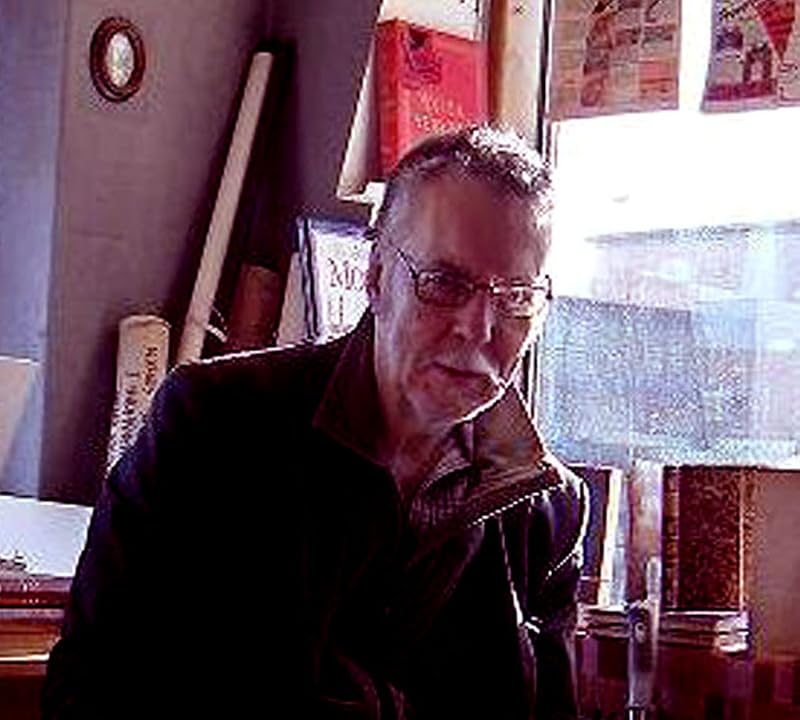
Kaj Bernhard Genell
Kaj Bernh. Genell was born in Gothenburg, Sweden, in 1944. After having barely endured a bourgeoise youth, he became interested in philosophy and, in 1983, after many years at the University of Gothenburg, published a book exclusively on existential ( in the Sarteian sense of the word ) Irony - “Ironi och existens.”
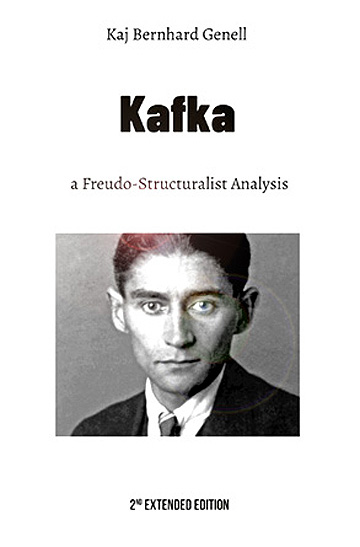
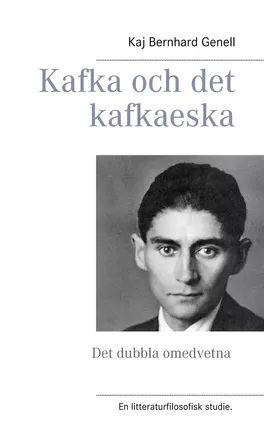
Soon hereafter, Genell, who since his teens had a great interest in one of the giants of Modernism, Franz Kafka, wrote a series of original papers at the University Gothenburg related to Kafka. Partly under supervision of the renown stark Marxist Kurt Aspelin, who then was a seinor teacher and lecturer there. This would later result in “Kafka och det Kafkaeska” (2018), an essay in Swedish on the Literary Technique of Kafka,and then later - published in English - an extended version of this book as “Kafka” (2021), - a book which is the main concern of this very website.
As a fiction writer Genell started out with books in the Swedish language, such as “Pistolen”, “Tavelstölden”, “Tegelkrona och skönheten”, ”Höstdrama” and the horror story “Skjuta sig fri”.
In 2021,” A case for Armamente,” a small idyllic crime story set in Baltimore, USA. Then With “The Lion´s Disease,” Genell has under his own name in his second English novel created a psychological and philosophical comment on pandemics by describing an odyssey to Indonesia on a Bulk Cargo Carrier. - Reading a book is to look into oneself.
In 2022 Kaj Bernh. Genell became a stipendiary, by being awarded a large sholarship from Sveriges Författarfond ( National Fund for Authors ).
: kajgenell at gmail.com
ON MYTH
INTRODUCTION
Three Hypothesizes
“However paradoxical it may seem, myth hides nothing: its function is to distort, not to make disappear.”
( Barthes, Mythologies )
In my previous books related to the subject of Kafka, Kafka och det Kafkaeska and , Kafka – A Freud-Structuralist Analysis (2022) , I attempted to provide evidence for a single hypothesis: that the Kafkaesque could not have been created without Kafka's ability to draw on material connected to Freud's psychoanalysis. I thus claimed that, historically speaking, there is no Kafka without Freud. In this present book, I have another hypothesis, which builds on the previous book's: I assert that with Kafka, the enormous influence that Kafka's works began to have, primarily from around 1940, when The Trial was published, was a.) a demystifying influence in large parts of the West, which largely b.) depended on a processing of the myths of psychoanalysis.
Fig.1. 1.
An anaclastic instrument, intended for studies of refraction.
Kafka had this new theory as a subtext in essential works such as The Trial and Metamorphosis,
which made an avalanche-like success everywhere, and in one fell swoop incorporated the Kafkaesque
into the general consciousness, and in the implied canon on which Western post-war culture rests.
If this was the case, how could that be? What was it about the myth of Psychoanalysis, “the
ubiquity of unconscious forces, which has changed how we perceive our entire culture, and Kafka’s
treatment of it in his works, which in some parts could be perceived as caricaturing, which in
turn could have accelerated this shift toward secularism? What I imply is that perhaps it is
more myths, more than philosophies, that bring about great changes. Certainly, neither Kafka
nor the general public who read Kafka had particularly solid knowledge of psychoanalysis.
Furthermore, the case is that the myths – which one can perceive as a form of “ideological
speech” ( in accordance with the theories of Barthes ) - that bring about changes often
do so by transforming into other myths, partly as a result of the intellectual criticism,
which by being powerfully pretentious, always distorts myths, or through art and literature,
which, in accordance with their nature, can do nothing but distort them.
Since myths are a kind of “système semiologique second” , a second hand signification system,
we thus have here an effect, which can be characterized as a third party one..
Kaj Bernh. Genell – Gothenburg, Nov 2025.
THE PROLIFIC MYTH
A common idea is that a myth is something one might analyze, and that it is something not really real,
but more fiction, albeit a fiction that has some kind of more ”profound” meaning than stories in general.
The strangeness of this is seldom subject to analysis. What few people realize is, that we all, individually, are parts of not just one, but parts of many myths. Equally few realize that these myths, of which we are so scarcely aware, significantly determine our lives. As Claude Lévi-Strauss asserts , it is not the task of myth research to clarify how humans think, nor how myths think, but how myth thinks in humans. Another task for myth research is to determine how myths (very often also parallel to religion) not only evolve but also originate.
To gain perspective on what a myth is and is not - which is not entirely easy to determine - one can, while
trying to determine this, also consider what humanity would have instead, as a better or worse substitute,
if myths had never existed. Some people argue that myths are socially necessary, being as they are
( according to Barthes ) “ideological speech” - and that the criterion of truth for a myth is its
"effectiveness." The effectiveness of a myth—so the argument goes—would be connected to its general,
empirically validated, positive validation and inspirational power. Roland Barthes , professor in
semiology and a radical left political agitator, in his book Mythologies (1957)argued that myths
constitute a system of communication that transforms historical, cultural meanings into purported
natural absolute truths. Myths are using everyday objects, images, or phrases or concepts as for,
filling them with potent ideological concepts ( meaning ). Myths, according to Barthes, upheave
bourgeois values, make them seem NATURAL, by creating a layer of meaning ( a "signification" )
that immediately simplifies complex realities and cover their rather vulgar origins. Myths are
thus by Barthes seen as sheer propaganda.
What is seldom discussed is Barthes concern ( in the final part of of Mythologies, ) , that myth criticism,
if it is a fundamentalist one , is problematic, and almost impossible.
As everyone knows, fiction can be both a myth itself and a part of a myth. Fiction can still examine,
in a conscious or unconscious way, the current overarching myth, as well as myths from earlier eras, or
alternatively, myths from humanity’s very early childhood, when we separated ourselves from beings with,
in some respects, lower levels of consciousness. The myth is peculiar when looked at more closely;
as Lévi-Strauss—the man behind books such as The Savage Mind and The Jealous Potters—points out,
the myth and its parts are such that no part of a myth is more important than another. Indeed, one
could say of a myth—unlike historical writing—that no part is independently significant, or that all
parts are. Just as it is in a work of art. Through integrated totality, art operates. But fiction
is then—as mentioned—both a myth, as a historical phenomenon, and a creator of myth in its diverse
forms: literature, visual arts, or film, etc., etc.
Myths are messages; they are communication. Myths are not very often created on demand. A conspiratorially
inclined person might believe that this is precisely what they do. That they are tailored to lead the herd
of sheep. No, myths mostly emerge from other created things, or other signs, concepts or myths..
They often come as something imposed, as if to seal holes that have opened up, or because something
hangs loosely and flaps in the wind. That this is the case does not mean that Power cannot benefit
from it, and that the powerless cannot suffer from the effects of the myths sanctioned by power.
Myths are not created from nothing, - no they are never primary - , but they always build on some
event or idea that has matured for a while. After a suitable time period, the myth thus – second
hand predators as they are - emerges. In this, it resembles mysticism, which, according to a theory
presented by G. Scholem, arises in relation to a religion only after some time has passed, and perhaps
when the religion in question has lost a little of its initial charm. And it is like the Renaissance,
which did not arise fifty years after antiquity, but only in the 1300s-1400s, when an aura had begun
to form around what the ancient people had engaged with, which attracted as one perhaps found one’s
own time rather gloomy , and a bit too overshadowed by Christianity . It would, of course, not least
in the interest of the powerless, be beneficial to try to clarify what promotes the creation of holes
and rifts, and what they are primarily filled with in terms of mythic material, and what it means when
things hang loosely and flap in the wind, especially when myths are keen to ensure that this does
not happen. What regularities exist in this vast ideological, trope, and narrative supramechanism of
myth production? What is it that causes, as soon as a sign, a concept, an ideology, a set of beliefs,
a conceptual phenomenon is born or made conscious, that a myth forms in its vicinity, overshadowing it?
Are there, as Barthes and Baudelaire thought, objects that are fundamentally suggestive, so that they are
almost doomed from their conception to evolve into myths? If so, why?
Were the works of Kafka and Freud such objects, - “fundamentally suggestive”? If so, why? If
they were, were they only suggestive in a certain historical context? If so, which context? “Le rapport
de la crise et du discours définit l´œuvre.”
It is important to realise that when the myth is formed it regards its object, which is a conception, a
set of conceptions or a set of beliefs and values, as PRIMA MATERIA, as something given, established,
and which in it self can not n be disputed. Hence myth, so to says, sets out as a source interpreting
the EVIDENT. Myth speaks directly to the people, as myth almost always is very simple in its form, and
positions itself as the friendly interpreter, the underdog, in service of the broader layers of the people.
That is why, because people also knows this, myth subsequently has been seen equivalent to “lie”,
to untruth. At the same time as the myth is seen as something which is not true, it has yet an existence,
and since it has obliterated what it is a myth about, it still stands as a kind of description of
something real, which, even if people always realize that it may not be true at all, still forms
itself as some kind of fact in the actual cultural universe.
Myth is, therefore, like the well-known face of the unknown, thriving as a backdrop in our society and
in the primitive parts of our minds.
We do not spend much time thinking of them, because we cannot. We are locked out of understanding the
myths because they are determinants of our thinking.
FICTION IN ENGLISH:
A Case For Armamente, paperback. Amazon.
Several people met with Martha when she was alive.
But what happened to her, and who was she? The old doctor,
Eric,wonders, as well as the University drop-out David.
Martha´s former husband, Reuben, also does...
The Lion´s Disease, paperback. Amazon.
(2022)
A large bulk Cargo Carrier ship leaves London Harbour. After a
couple of hours at sea it becomes clear that there is a disease
onboard. Soon everybody realizes that a pandemic might be unfolding
from this very ship. Samuel Diggersson, 3rd mate onboard, and his
captain, Dan Stork, try to find a way to save the world.
Darkness, paperback. Amazon.
Ruben is a Philosophy student in Tampa, Florida. His girlfriend
Eunice mysteriously dies. Ruben´s closest buddy, the brilliant
Raoul, is accused of having let his dog Bandit, a Rottweiler bastard,
drown Eunice in the bay. Ruben is desperately looking for answers
and he gets more and more involved in an absolutely nightmarish story.
Kafka-theory and General CULTURAL THEORY
Links to sales sites, PDFs as well as online (!) versions of some of my books:
:
Några av min svenska böcker,
- med audio sample .....
Ur Noveller. Början på novellen "Svart Express". Jfr. Four Gruesome Stories, The Bus .
------------
Pistolen
En bok om Robert, som äger en pistol. Hur det nu är, så
söker Robert bli av med pistolen, men då hamnar den av en händelse
hos en annan människa, som också den vill bli av med det
dödsbringande
vapnet.
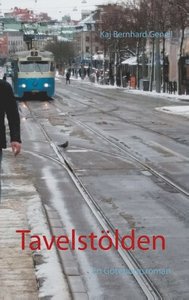
Tavelstölden
Äldre män som mötts upp i åren
kan utveckla en sällsynt vänskap.
Vad det nu beror
på. I denna roman
finner två gubbar,
Edward Tegelkrona
och Lester Axelsson,
på en metod att
stjäla
en dyr tavla. Men vad skall
de göra med tavlan sen då?.
Skjuta sig fri
Det kan vara svårt att bli lurad i affärer.
Det är också svårt att leva sitt liv fullt ut.
Men behöver man verkligen gå så här långt?
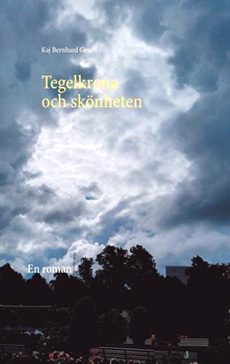
Tegelkrona och skönheten
Edward Tegelkrona skall åka till sin syster
med några krukväxter, men han blir uppehållen
i trappan. En dörr står på glänt i bottenvåningen.
Inifrån hörs en man gråta. Edward går in och ser
en naken flicka strypt på en säng. Invid på
syns en ung man som gråter... Med ens
Edward igen den döda flickan. Men vad har
hänt? Romanen är som spänningsroman både
realistisk, romantisk och burleskt fantastisk.
Ett oblitt öde kan det vara, att födas vacker.
Denna bok handlar just om en sådan
människa.
Och här går det illa.
Riktigt illa. Ty någon tar
livet av skönheten. Och en arab blir misstänkt.
Men då griper hjälten - den
gamle konstkännaren och flanören
- Edward Tegelkrona in ... !
NEW!
Lejonsjukan
En berättelse om hur en okänd sjukdom bryter ut
på ett fartyg till sjöss. Rafflande - och hiskeligt - berättas här om de perspektiv
man ställs inför med pandemier.
Särskilt belyses pandemins filosofi och psykopatens psykologi.
Höstdrama
Här blir alla överraskade när en ung svart
flicka ljuger för sin omgivning.
Edward Tegelkrona, den gamle dagdrivaren, blir indragen
i ett drama som slutar illa
för de godtrogna.
En ... sällsam Göteborgsskildring.
NEW!!!!
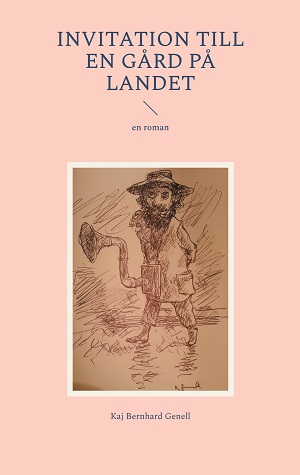
Invitation till en gård på landet
Roman. BoD 2024.
Edward får ett telefonsamtal från sin vän Herbert som han inte sett
på många år.
Herbert äger en liten herrgård på landet. Han har just fått ett brev
som bekymrar honbom.
Uppgifterna i brevet är mystiska och
skrämmande.
Herbert ber Edward om hjälp. Denne griper sig an uppgiften med nyfikenhet och hjärtlighet.